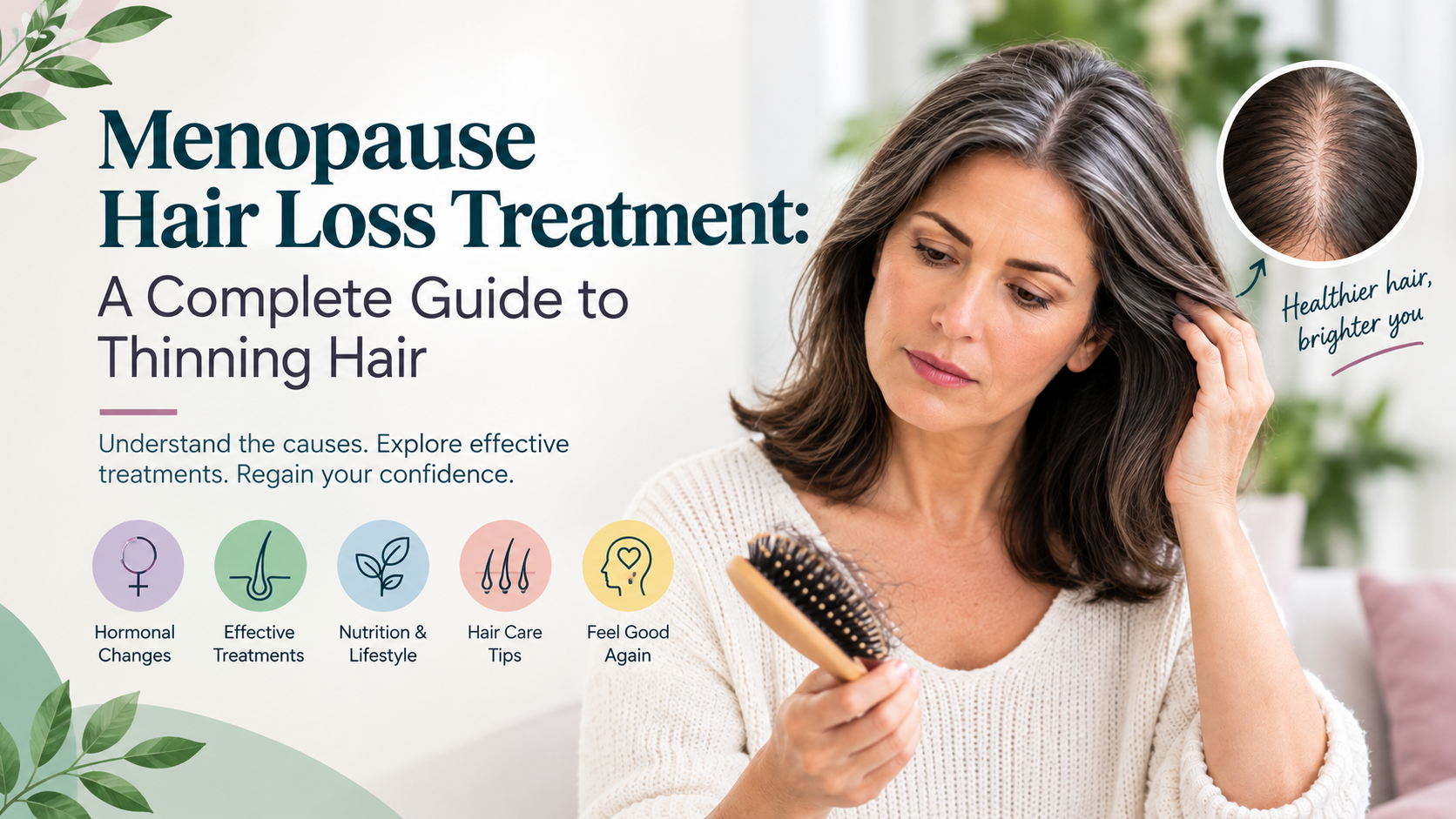
Hair thinning can be an unexpected and frustrating part of menopause. Many women notice more hair in their brush or shower drain, a wider part, a thinner ponytail, or less volume around the crown. Hormonal changes during menopause can contribute to these changes, but menopause is not the only possible cause of hair loss.
Understanding menopausal hair loss treatment starts with identifying why your hair is thinning. Female pattern hair loss, nutritional deficiencies, thyroid problems, medications, stress, illness, and scalp conditions can cause similar symptoms. A dermatologist can help determine the cause and develop an appropriate treatment plan.
What Causes Hair Loss During Menopause?
Click Here To Visit Website For Menopause Symptoms Treatment!..
Menopause involves major hormonal changes, particularly a decline in estrogen. These changes can affect the hair-growth cycle and may contribute to thinner scalp hair. The American Academy of Dermatology notes that women may notice more scalp hair loss during menopause, sometimes beginning with a widening part or a receding hairline.
One common condition during midlife is female pattern hair loss (FPHL), also called female pattern androgenetic alopecia. It is hereditary and becomes more common after menopause. Hormonal changes may play a role in its development or progression.
However, not every case of thinning hair during menopause is caused by hormones.
Other possible causes include:
- Iron deficiency
- Thyroid disorders
- Low protein intake
- Certain medications
- Major illness or surgery
- Significant weight loss
- Severe or prolonged stress
- Alopecia areata
- Scalp inflammation or infection
- Excessive chemical or heat damage
- Genetic hair loss
Because different causes require different treatments, diagnosing the underlying problem is an important first step.
What Does Menopausal Hair Loss Look Like?
Click Here To Visit Website For Menopause Symptoms Treatment!..
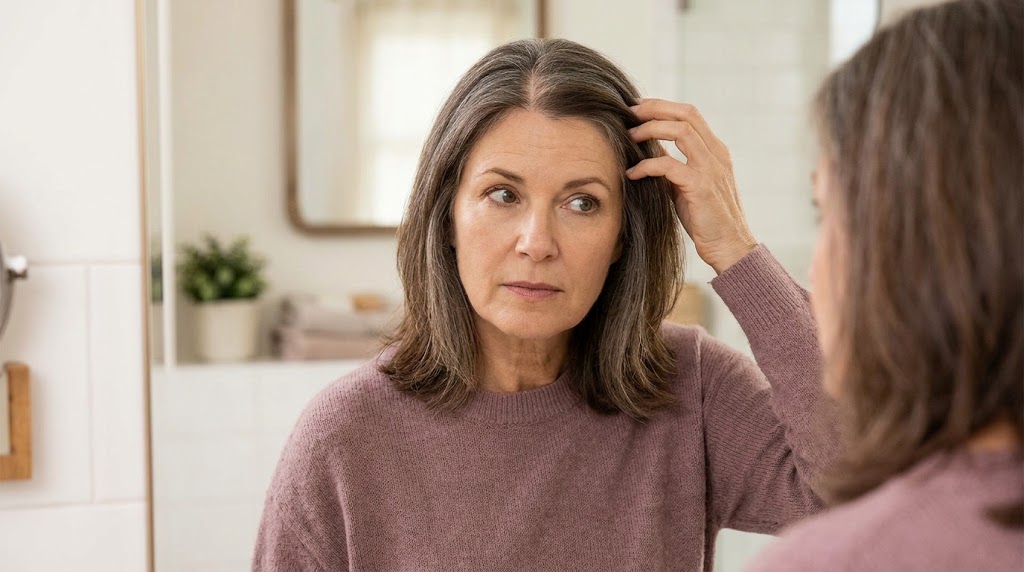
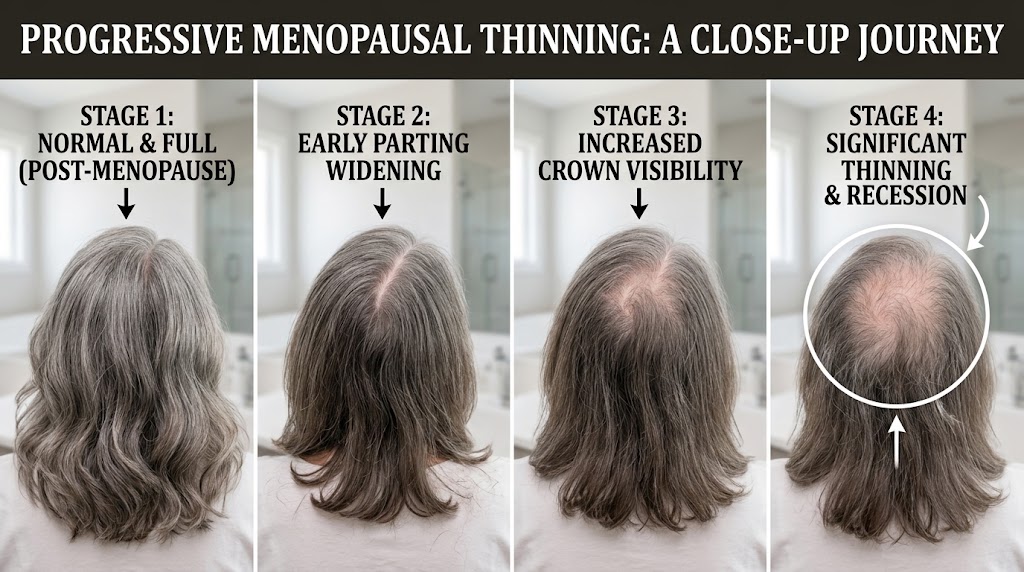
Menopausal hair loss may develop gradually. You may not suddenly become bald. Instead, changes can be subtle and become more noticeable over months or years.
Common signs include:
- A widening center part
- A thinner ponytail
- Reduced volume at the crown
- More visible scalp
- Gradual overall thinning
- Hair that feels finer than before
- Increased shedding
- More hair visible in the shower or brush
Female pattern hair loss typically affects the top of the scalp and often begins with a widening part. Unlike typical male-pattern hair loss, the front hairline usually does not recede dramatically.
Is Hair Loss a Normal Part of Menopause?
Click Here To Visit Website For Menopause Symptoms Treatment!..
Some degree of hair thinning can occur during menopause, but significant or rapidly progressing hair loss should not automatically be blamed on menopause.
Hair loss can have several causes at the same time. For example, a woman may have female pattern hair loss along with iron deficiency or thyroid disease.
This is why seeing a dermatologist can be useful, particularly when hair loss is new, persistent, severe, or progressing quickly. A dermatologist may examine the scalp and hair, perform a hair-pull test, and order blood tests when a nutritional deficiency, hormone imbalance, thyroid problem, or another medical condition is suspected.
Minoxidil for Menopausal Hair Loss
Minoxidil is one of the most established treatments for female pattern hair loss and is commonly recommended by dermatologists.
The American Academy of Dermatology reports that topical minoxidil is FDA-approved for women with female pattern hair loss. Products containing 2% or 5% minoxidil are available, depending on the formulation.
Minoxidil may:
- Stimulate hair growth
- Reduce further hair loss
- Increase the appearance of hair thickness
- Help maintain existing hair
However, it does not usually restore a completely full head of hair.
How Long Does Minoxidil Take to Work?
Hair grows slowly, so results are not immediate. The AAD notes that women generally need to use minoxidil consistently for approximately 6 to 12 months to determine how well it works.
Some women experience increased shedding during the first several weeks of treatment. This temporary shedding can occur as the hair-growth cycle changes.
Minoxidil needs to be continued to maintain its benefits. If treatment is stopped, the hair supported by the medication may gradually become thinner again.
Possible Minoxidil Side Effects
Possible side effects include:
- Scalp irritation
- Dryness
- Scaling
- Itching
- Redness
- Unwanted facial hair growth
Applying the product carefully to the scalp can reduce the risk of unwanted hair growth on the face.
Women who are pregnant, planning pregnancy, or breastfeeding should avoid minoxidil unless specifically advised otherwise by their healthcare professional.
Prescription Treatments for Female Pattern Hair Loss
If minoxidil does not provide enough improvement, a dermatologist may discuss prescription treatments.
Spironolactone
Spironolactone is commonly prescribed by dermatologists for female pattern hair loss, although it is not FDA-approved specifically for this indication.
It may help reduce ongoing hair loss and promote growth in some women. Your doctor should review your medical history, kidney and adrenal health, medications, and supplements before prescribing it.
Finasteride and Other Medications
Some dermatologists may consider medications such as finasteride or dutasteride for selected women. These medications are not FDA-approved specifically for female pattern hair loss in women, and their use requires careful medical assessment.
These medications should not be used during pregnancy because of potential risks to a developing fetus.
Treatment choices depend on factors such as age, overall health, other medications, the cause of hair loss, and pregnancy considerations.
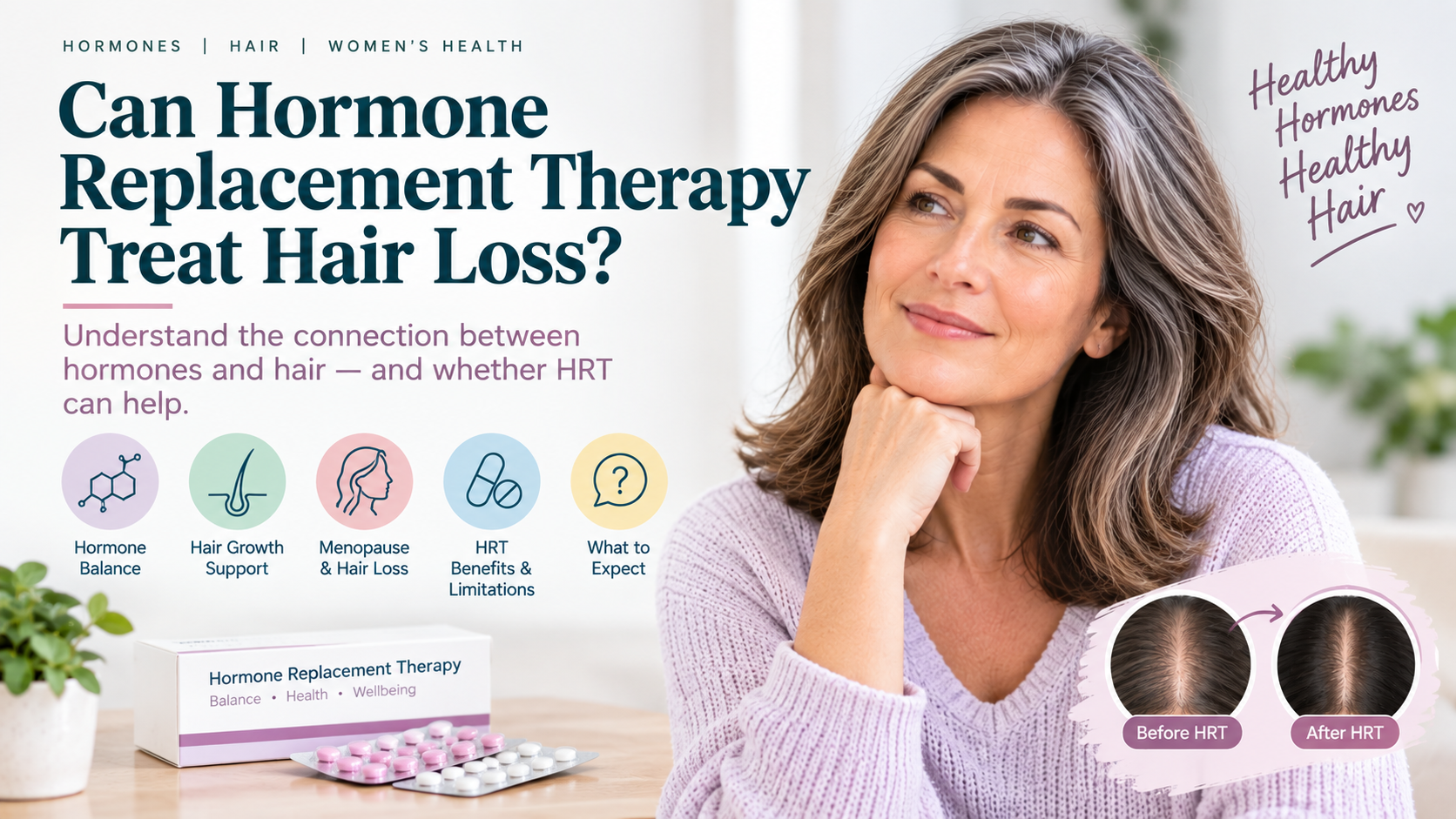
Can Hormone Replacement Therapy Treat Hair Loss?
Click Here To Visit Website For Menopause Symptoms Treatment!..
Menopause-related hormone changes can affect the hair cycle, but hormone replacement therapy (HRT) should not be started solely as a hair-loss treatment without medical evaluation.
HRT is primarily used to manage appropriate menopausal symptoms and has potential benefits and risks that should be discussed with a qualified healthcare professional.
If you are considering HRT and are also experiencing hair thinning, tell your healthcare provider. They can consider your complete menopause symptoms, medical history, risk factors, and hair-loss pattern.
Vitamins and Supplements for Thinning Hair
Hair-growth supplements are widely marketed to women during menopause, but supplements are not automatically effective or safe.
If testing shows a deficiency of iron, zinc, or another nutrient, correcting that deficiency may be appropriate. However, taking large amounts of vitamins without a documented deficiency can be harmful. The AAD specifically cautions that excessive amounts of certain nutrients may worsen hair loss or cause other health problems.
Important Nutrients for Healthy Hair
A balanced diet should provide:
- Adequate protein
- Iron
- Zinc
- Vitamin D
- Vitamin B12
- Folate
- Other essential vitamins and minerals
Good dietary sources include eggs, fish, lean meats, beans, lentils, dairy products, nuts, seeds, vegetables, fruits, and whole grains.
If you suspect a nutritional deficiency, ask your healthcare provider whether blood testing is appropriate before starting supplements.
Can Diet Help Menopausal Hair Loss?
A nutritious diet cannot guarantee that menopausal hair loss will stop, but good nutrition supports healthy hair growth.
Protein is particularly important because hair is primarily composed of a protein called keratin.
Try to include a source of protein with meals, such as:
- Eggs
- Fish
- Chicken
- Greek yogurt
- Beans
- Lentils
- Tofu
- Nuts and seeds
Avoid extreme dieting or rapid weight loss. Significant weight loss can itself trigger a type of temporary shedding called telogen effluvium.
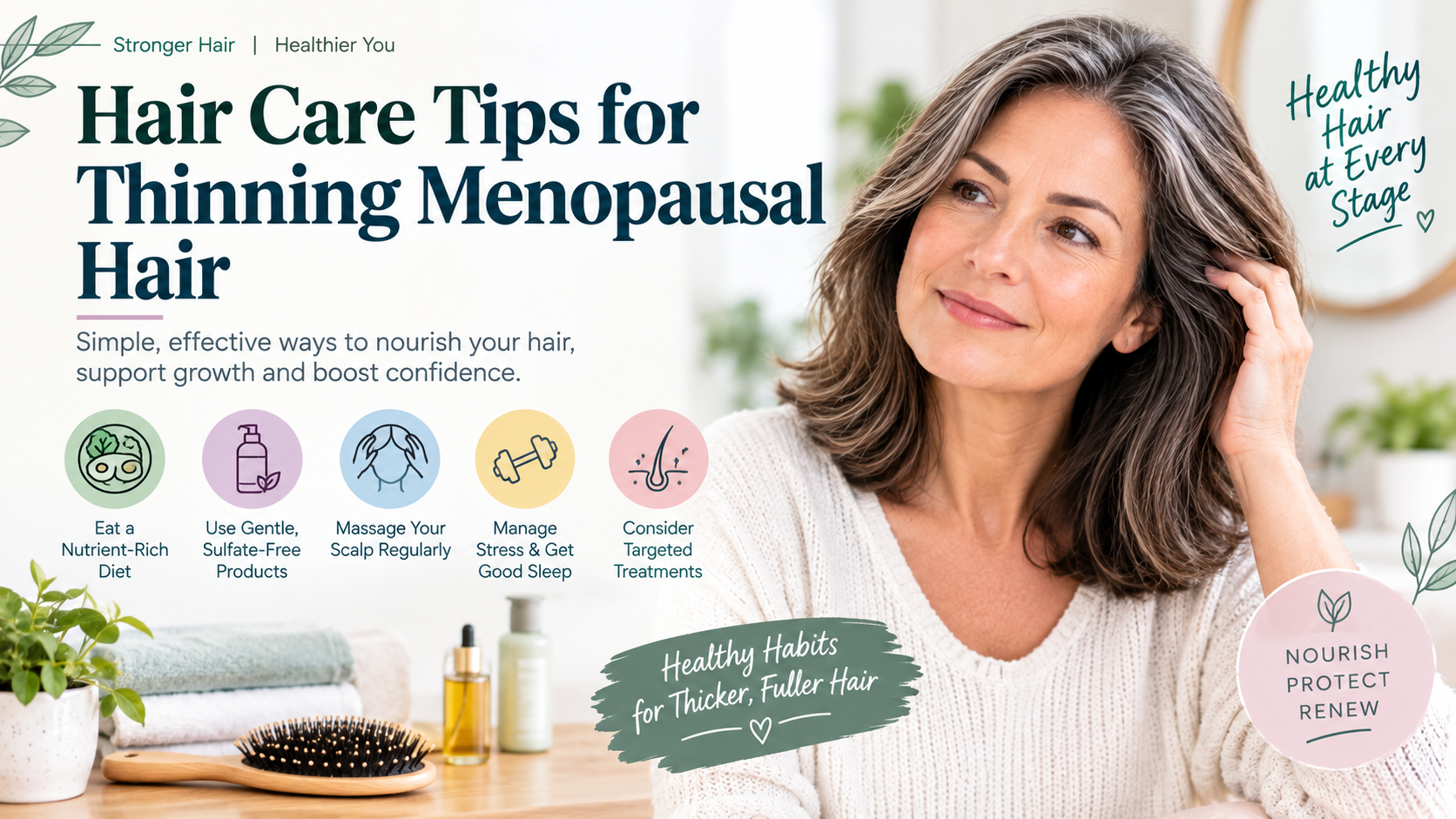
Hair Care Tips for Thinning Menopausal Hair
Click Here To Visit Website For Menopause Symptoms Treatment!..
Medical treatment addresses the underlying cause, while gentle hair care can help minimize breakage and make existing hair look fuller.
Consider these strategies:
Avoid Excessive Heat
Frequent use of flat irons, curling irons, and high-temperature blow dryers can weaken the hair shaft and increase breakage.
Use lower heat whenever possible and avoid holding hot tools against the same section of hair for extended periods.
Be Gentle With Wet Hair
Wet hair is more vulnerable to stretching and breakage. Use a wide-tooth comb and avoid aggressive brushing.
Avoid Tight Hairstyles
Regularly wearing very tight ponytails, buns, braids, or extensions can place tension on hair follicles. In some cases, prolonged pulling can contribute to traction alopecia.
Limit Chemical Processing
Frequent bleaching, relaxing, perming, or harsh coloring can damage the hair shaft.
If your hair has become fragile, consider reducing chemical treatments and spacing them farther apart.
Do Hair-Loss Shampoos Regrow Hair?
Hair-loss shampoos may make hair appear fuller by improving moisture and reducing breakage, but they generally do not regrow hair or stop the underlying progression of female pattern hair loss.
A shampoo can therefore be part of a gentle hair-care routine, but it should not replace evidence-based medical treatment when an underlying hair-loss condition is present.
Laser Therapy for Thinning Hair
Low-level light or laser devices are another treatment option that some people consider for hereditary hair loss.
The AAD reports that some studies have shown promising results with at-home laser devices, but more research is needed to determine who benefits most and the long-term effectiveness and safety of these devices.
If you are considering a laser cap or comb, discuss it with a dermatologist before purchasing an expensive device.
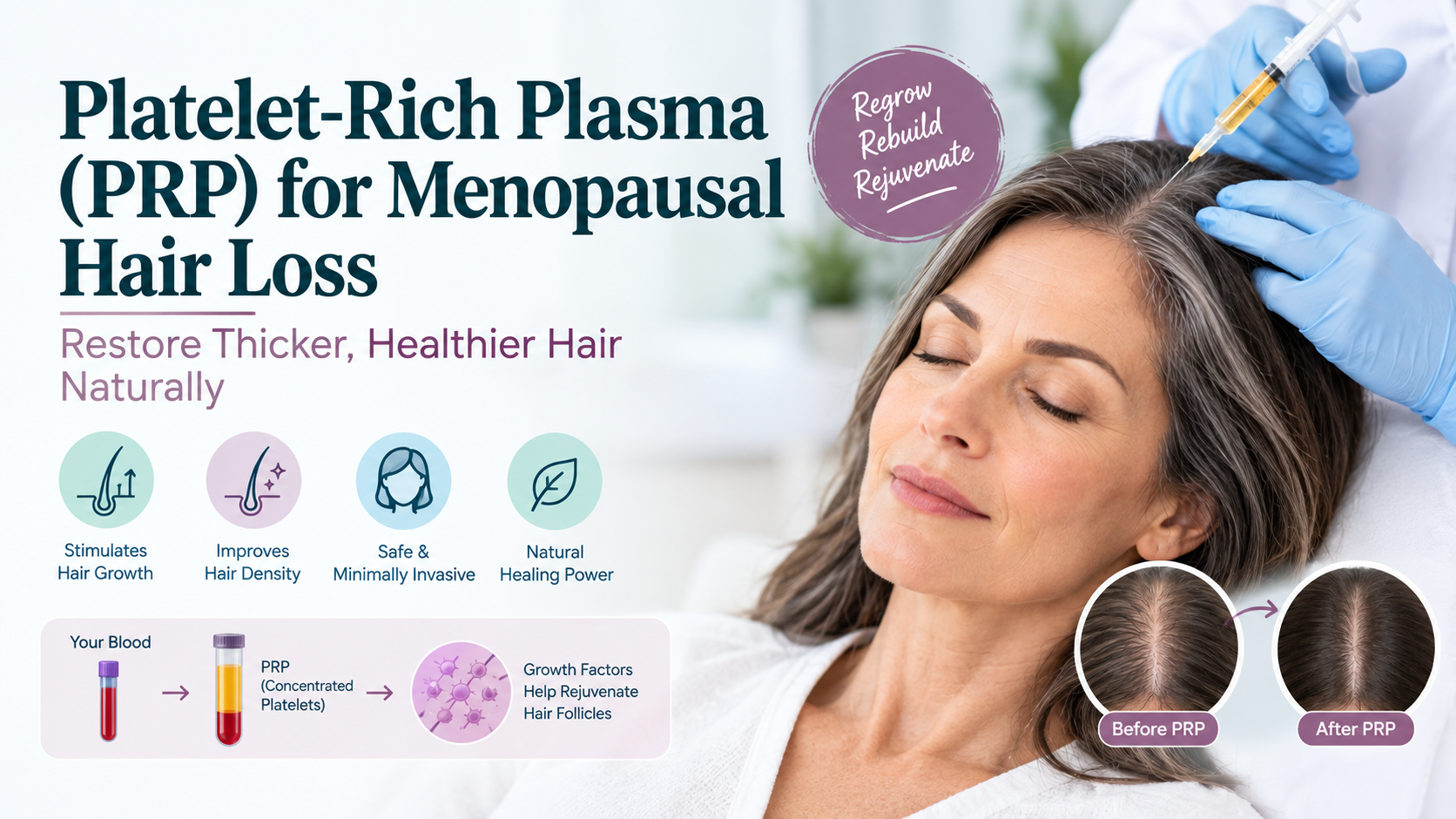
Platelet-Rich Plasma (PRP) for Menopausal Hair Loss
Click Here To Visit Website For Menopause Symptoms Treatment!..
PRP therapy involves drawing a person’s blood, processing it to concentrate platelets, and injecting the preparation into areas of hair thinning.
Research into PRP for female pattern hair loss is ongoing. The AAD describes early findings as promising but notes that additional research is needed to establish its effectiveness and safety.
Because PRP can be expensive and usually requires multiple treatments, discuss the evidence, expected results, cost, and maintenance requirements with a qualified provider.
Can a Hair Transplant Help?
A hair transplant may be an option for selected women with female pattern hair loss.
During a transplant, healthy hair follicles are moved from one area of the scalp to another. However, not every woman is a suitable candidate.
Women with widespread thinning may not have enough healthy donor hair for transplantation. A dermatologist or qualified hair-transplant specialist can evaluate the density and distribution of your hair before recommending this approach.
When Should You See a Dermatologist?
Consider professional evaluation if you notice:
- Rapid hair loss
- Sudden bald patches
- A widening part that continues to progress
- Significant scalp visibility
- Itching, pain, redness, or scaling
- Hair loss around the eyebrows or eyelashes
- A receding hairline
- Scarring or shiny areas of scalp
- Hair loss accompanied by other unexplained symptoms
Sudden or patchy hair loss may have causes other than menopause and may require specific treatment.
Early evaluation can be particularly useful because some forms of hereditary hair loss are progressive, and treatment tends to work better when started earlier.
How Is Menopausal Hair Loss Diagnosed?
A dermatologist will usually begin by asking about:
- When the hair loss started
- Whether it is sudden or gradual
- Family history of hair loss
- Menopause symptoms
- Recent illnesses
- Weight changes
- Diet
- Medications and supplements
- Hair-care practices
- Stress
- Other medical conditions
The doctor may examine the scalp and hair closely. If a nutritional deficiency, thyroid condition, hormone imbalance, infection, or another medical problem is suspected, blood testing or occasionally a scalp biopsy may be recommended.
Frequently Asked Questions
Can menopause cause thinning hair?
Yes. Hormonal changes during menopause can contribute to scalp hair thinning. Female pattern hair loss also becomes more common during midlife and after menopause.
What is the most common treatment for menopausal hair thinning?
For women with female pattern hair loss, topical minoxidil is one of the most-recommended treatments. However, the appropriate treatment depends on the actual cause of hair loss.
How long does it take for hair to grow back?
Hair grows slowly. With minoxidil, it may take approximately 6 to 12 months to determine how well the treatment is working.
Should I take biotin for menopausal hair loss?
Biotin should not automatically be taken for hair loss. Supplements are most useful when a deficiency is present, and excessive amounts of certain nutrients can cause health problems. Discuss supplements with a healthcare professional.
Can thinning hair after menopause grow back?
Some hair loss can improve when the underlying cause is identified and treated. Female pattern hair loss can be progressive, but treatments such as minoxidil can help maintain or improve hair density in some women.
Final Thoughts
Menopausal hair loss can affect confidence and quality of life, but thinning hair should not simply be accepted without investigating the cause. Hormonal changes may contribute to hair thinning, particularly female pattern hair loss, but nutritional deficiencies, thyroid problems, medications, stress, illness, and scalp conditions can produce similar symptoms.
Menopausal hair loss treatment may include topical minoxidil, prescription medications, nutritional correction when deficiencies are identified, laser therapy, PRP, or hair transplantation for selected patients. Gentle hair care, adequate nutrition, and avoiding excessive heat or chemical damage can also help protect fragile strands.
The most important step is obtaining an accurate diagnosis. A dermatologist can determine the likely cause of your thinning hair and help create a treatment plan based on your health, symptoms, and goals. Starting appropriate treatment early may provide a better opportunity to preserve existing hair and improve density.