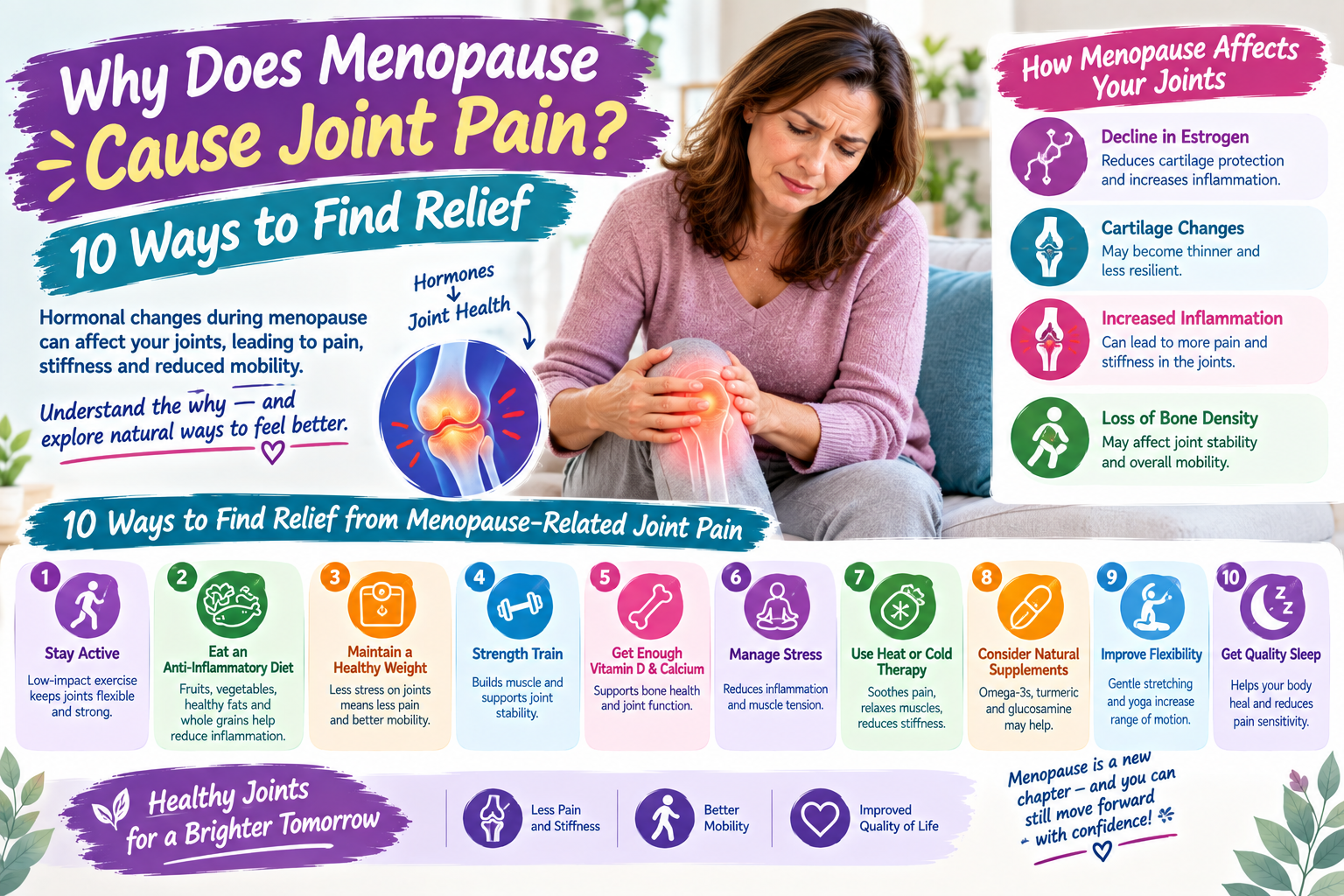
Joint pain is a common complaint during perimenopause and menopause. Aching knees, stiff hips, sore shoulders, uncomfortable fingers, and general muscle and joint discomfort can make everyday activities feel harder than they used to.
For some women, joint pain may appear alongside other menopause symptoms such as hot flashes, night sweats, sleep problems, mood changes, and fatigue. While joint pain can have several causes, hormonal changes during menopause may contribute to changes in the way the body experiences inflammation, pain, and stiffness.
The good news is that there are several lifestyle strategies that may help support comfortable movement and overall joint health.
Why Does Menopause Cause Joint Pain?
Click Here To Visit Website For Menopause Symptoms Treatment!..
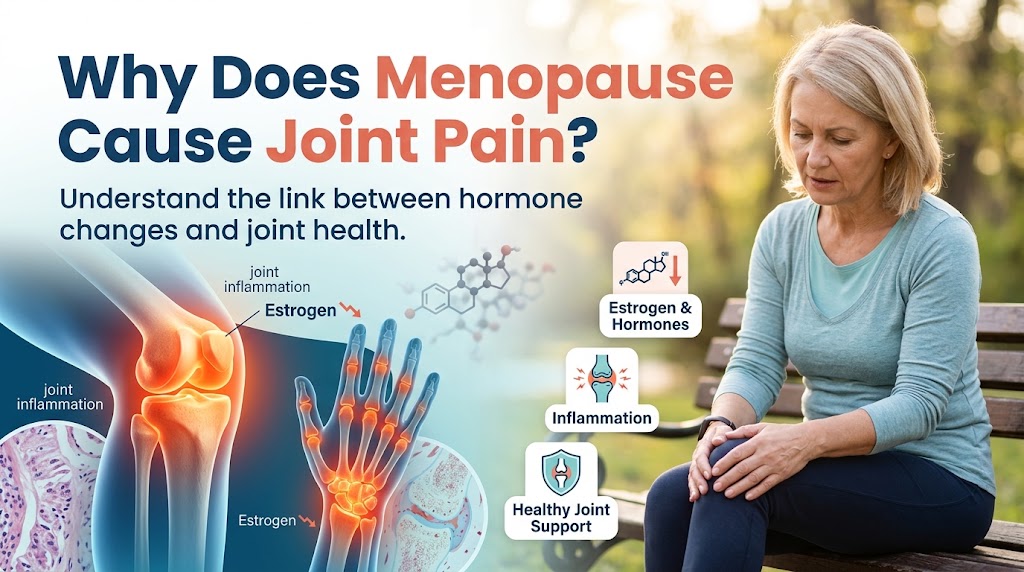
One of the main reasons joint pain may occur during menopause is the decline in estrogen.
Estrogen affects many parts of the body, including bones, muscles, connective tissues, and joints. As estrogen levels fluctuate and eventually decline during the menopausal transition, some women may notice more stiffness, aching, or sensitivity to pain.
Estrogen also has effects on inflammatory processes. Changes in hormone levels may influence how the body regulates inflammation, potentially contributing to joint discomfort.
Other menopause-related changes can also play a role. Poor sleep, reduced physical activity, weight changes, muscle loss, and increased stress may all make aches and stiffness feel worse.
However, not every case of joint pain is caused by menopause. Conditions such as osteoarthritis, rheumatoid arthritis, thyroid disorders, injuries, vitamin deficiencies, or other medical conditions can also cause joint symptoms. Persistent or severe pain should therefore be discussed with a healthcare professional.
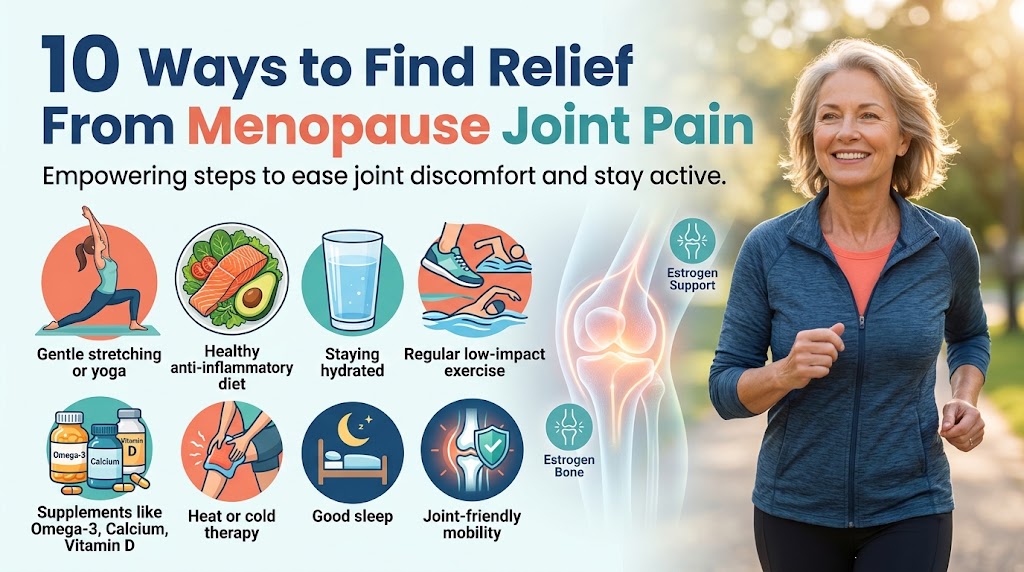
10 Ways to Find Relief From Menopause Joint Pain
Click Here To Visit Website For Menopause Symptoms Treatment!..
1. Stay Physically Active
Regular movement is one of the most useful ways to support joint health.
It may seem natural to rest when your joints hurt, but prolonged inactivity can sometimes increase stiffness. Gentle, consistent activity can help maintain mobility, muscle strength, balance, and flexibility.
Consider activities such as:
- Walking
- Swimming
- Cycling
- Low-impact aerobics
- Dancing
- Gentle yoga
- Water-based exercise
Start gradually if you have been inactive. Even short periods of movement throughout the day can be beneficial.
2. Try Strength Training
Muscle strength becomes increasingly important during and after menopause.
Age-related muscle loss can reduce support around joints and make everyday movements more demanding. Strength training can help maintain muscle mass and improve functional strength.
You might use:
- Resistance bands
- Light dumbbells
- Body-weight exercises
- Weight machines
- Simple exercises such as sit-to-stands
Aim for exercises that work the major muscle groups while using a level of resistance appropriate for your fitness level.
If you have significant joint pain or an existing medical condition, consider getting professional guidance before starting a new exercise program.
3. Include Gentle Stretching
Stretching may help reduce feelings of stiffness and improve your range of motion.
Try spending a few minutes stretching after a warm-up or following physical activity. Gentle movements for the hips, shoulders, calves, hamstrings, and back may help you move more comfortably.
Avoid forcing a stretch or bouncing during the movement. Stretching should feel gentle rather than painful.
A simple morning routine can also help if you wake up feeling stiff. Begin with slow movements and gradually increase your range of motion.
4. Maintain a Healthy Weight
Weight changes are common during midlife, and carrying excess weight can increase the mechanical load placed on weight-bearing joints such as the knees, hips, ankles, and feet.
If weight management is appropriate for you, focus on sustainable habits rather than extreme diets.
A balanced eating pattern can include:
- Vegetables and fruits
- Beans and lentils
- Whole grains
- Lean proteins
- Fish
- Nuts and seeds
- Healthy sources of unsaturated fats
Even small, sustainable lifestyle changes may support overall health and physical comfort.
5. Eat an Anti-Inflammatory-Style Diet
Diet cannot eliminate menopause-related joint pain, but nutritious foods can support overall health and may help promote a healthy inflammatory balance.
Consider emphasizing foods such as fatty fish, vegetables, berries, legumes, whole grains, nuts, seeds, and olive oil.
Omega-3 fatty acids found in fish such as salmon, sardines, and mackerel are particularly useful components of a balanced diet.
At the same time, try to limit excessive intake of highly processed foods, added sugars, and foods high in unhealthy fats.
Instead of searching for one “miracle” food, focus on the overall quality and consistency of your eating pattern.
6. Prioritize Calcium and Vitamin D
Hormonal changes during menopause can affect bone health, making calcium and vitamin D especially important.
Calcium helps maintain strong bones, while vitamin D helps the body absorb calcium and plays other important roles in bone and muscle health.
Good food sources of calcium include:
- Yogurt
- Milk
- Cheese
- Calcium-fortified plant beverages
- Tofu made with calcium
- Certain leafy greens
- Canned fish with edible bones
Vitamin D can come from sunlight exposure, foods, and supplements when appropriate.
Your individual nutritional needs depend on factors such as age, diet, medications, and health conditions. Talk with a healthcare professional before starting high-dose supplements.
7. Improve Your Sleep
Poor sleep can make pain feel more difficult to manage.
Unfortunately, menopause can interfere with sleep through hot flashes, night sweats, anxiety, changing sleep patterns, or other symptoms. This can create a cycle in which poor sleep contributes to fatigue and increased sensitivity to discomfort.
Try creating a consistent sleep routine.
Helpful habits may include:
- Going to bed and waking at similar times
- Keeping your bedroom comfortable and cool
- Limiting caffeine later in the day
- Reducing screen exposure before bedtime
- Practicing relaxation techniques
- Exercising regularly, preferably earlier in the day if evening exercise affects your sleep
If persistent insomnia or severe night sweats are affecting your quality of life, discuss them with a healthcare professional.
8. Use Heat or Cold for Temporary Comfort
Heat and cold therapy can sometimes provide temporary relief from aches and stiffness.
A warm shower, heating pad, or warm compress may help relax muscles and reduce the sensation of stiffness.
Cold packs may be useful after activity when a joint feels irritated or swollen.
Always protect your skin by wrapping ice packs or heating devices in a cloth. Avoid prolonged exposure or extreme temperatures.
If a joint is significantly swollen, red, hot, or severely painful, don’t rely solely on home treatments. Seek medical advice.
9. Manage Stress
Stress can influence muscle tension, sleep, energy levels, and the way you experience pain.
Menopause itself can be a stressful period because of physical symptoms, changing sleep patterns, work responsibilities, family demands, and other life changes.
Relaxation practices may help you cope with discomfort and improve overall well-being.
Consider:
- Deep breathing
- Meditation
- Gentle yoga
- Walking outdoors
- Journaling
- Relaxing hobbies
- Spending time with supportive friends or family
You don’t need to eliminate all stress. Even a few minutes of intentional relaxation each day can become part of a healthy routine.
10. Talk With a Healthcare Professional About Persistent Pain
Lifestyle changes can be helpful, but ongoing joint pain deserves attention.
A healthcare professional can help determine whether your symptoms are related to menopause or another condition.
Depending on your symptoms, they may consider conditions such as osteoarthritis, rheumatoid arthritis, thyroid problems, injuries, or nutritional deficiencies.
Medical evaluation is especially important if you experience:
- Severe or rapidly worsening pain
- Significant swelling
- Red or hot joints
- Persistent morning stiffness
- Joint deformity
- Fever
- Unexplained weight loss
- Weakness or numbness
- Pain following a significant injury
A healthcare professional can also discuss treatment options for menopause symptoms when appropriate. Hormone therapy may be suitable for some women, but it is not appropriate for everyone and should be considered individually with a qualified clinician.
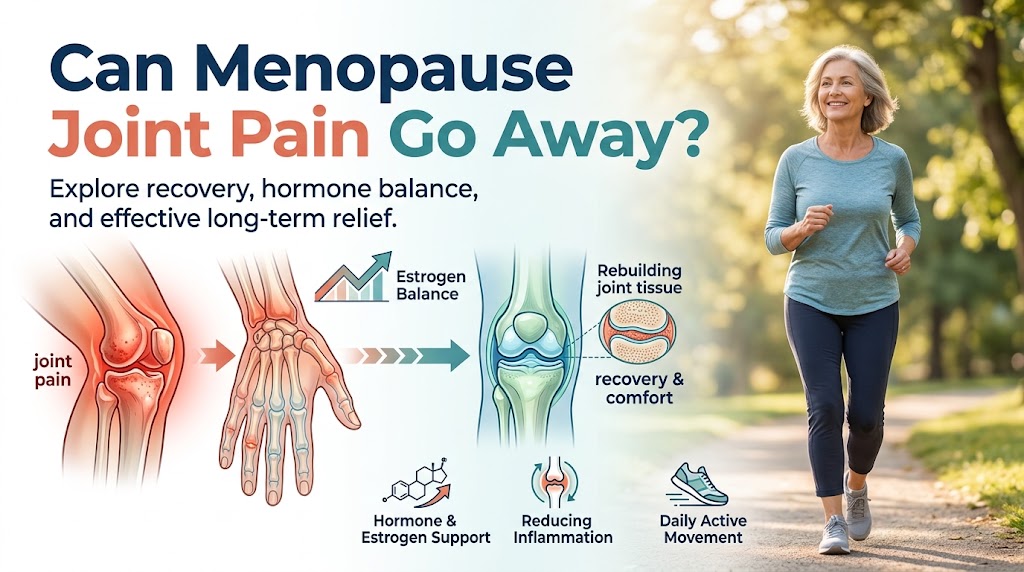
Can Menopause Joint Pain Go Away?
Click Here To Visit Website For Menopause Symptoms Treatment!..
Menopause-related joint discomfort varies from person to person. Some women notice symptoms during perimenopause that improve over time, while others continue to experience discomfort after menopause.
Because joint pain has many possible causes, it is important not to automatically assume that every ache is caused by changing hormones.
Keeping a simple symptom diary can be useful. Record where the pain occurs, when it appears, what activities make it better or worse, sleep quality, and other menopause symptoms.
This information can help you and your healthcare professional identify patterns and determine whether additional evaluation is needed.
A Simple Daily Routine for Joint Comfort

Click Here To Visit Website For Menopause Symptoms Treatment!..
A practical routine doesn’t have to be complicated.
Morning: Start with gentle stretching and a short walk or mobility routine.
During the day: Avoid sitting for long periods. Get up regularly, walk around, and perform normal daily activities as comfortably as possible.
Exercise: Include low-impact aerobic activity and strength exercises several times per week.
Meals: Build meals around vegetables, fruits, whole grains, protein, and healthy fats while ensuring adequate calcium and vitamin D.
Evening: Practice relaxation techniques and establish a consistent bedtime routine.
The goal isn’t to eliminate every ache overnight. Instead, focus on building habits that support mobility, strength, sleep, nutrition, and overall health.
Final Thoughts
Menopause joint pain can be frustrating, particularly when stiffness and aching begin to interfere with exercise, sleep, work, or everyday activities. Changes in estrogen may contribute to joint discomfort, but other factors—including aging, reduced activity, weight changes, poor sleep, and underlying medical conditions—can also play a role.
Staying active, strengthening muscles, stretching regularly, eating a balanced diet, supporting bone health, getting enough sleep, managing stress, and using appropriate heat or cold may help many women manage everyday discomfort.
Most importantly, persistent or unexplained joint pain shouldn’t simply be dismissed as “just menopause.” Getting the right evaluation can help identify the cause and ensure that appropriate treatment is considered.
With the right combination of healthy habits and professional guidance when needed, many women can continue moving comfortably and maintain an active lifestyle throughout menopause and beyond.