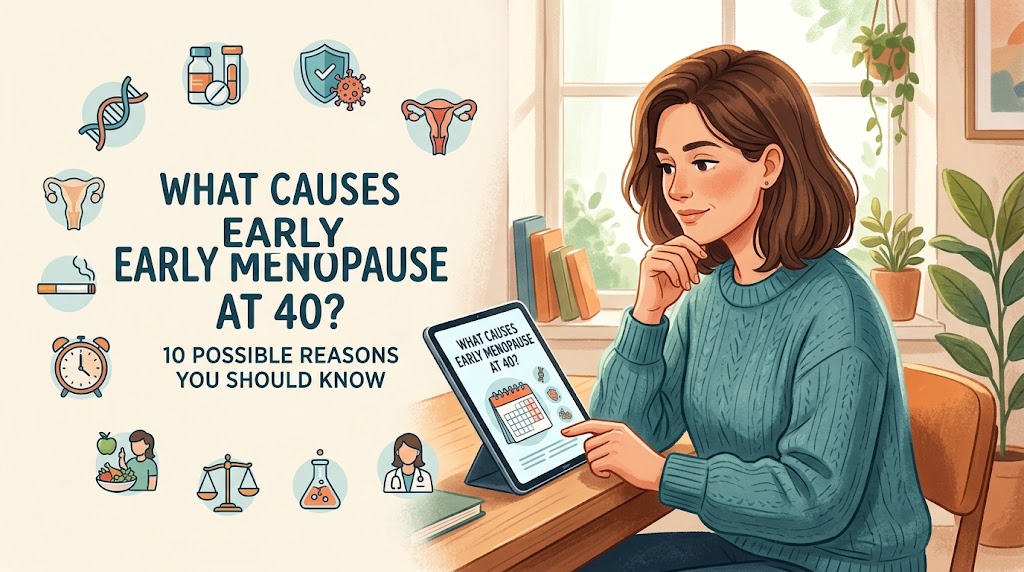
Menopause is a natural stage of aging, but experiencing menopause around age 40 can feel surprisingly early. If your periods have become irregular, stopped completely, or you are experiencing hot flashes, night sweats, mood changes, or sleep problems at this age, you may wonder: What causes early menopause at 40?
Menopause usually occurs between the ages of 45 and 55, with the average age around 51. When menopause occurs before age 45, it is generally considered early menopause. When ovarian function stops before age 40, doctors may consider it premature menopause or primary ovarian insufficiency (POI), depending on the circumstances.
There are many possible reasons why menopause-like changes can happen around 40. Sometimes there is a clear explanation, while in other cases, no specific cause can be identified.
Understanding the potential causes can help you discuss your symptoms with a healthcare professional and determine whether additional testing is appropriate.
What Does Menopause at 40 Mean?

Click Here To Visit Website For Menopause Symptoms Treatment!..
Menopause is diagnosed when a woman has gone 12 consecutive months without a menstrual period and there is no other explanation for the absence of periods.
However, reaching age 40 and suddenly having irregular periods does not necessarily mean you have reached menopause. Changes in menstruation can occur during perimenopause, the transition leading up to menopause.
During perimenopause, estrogen and progesterone levels can fluctuate considerably. Periods may become heavier, lighter, shorter, longer, or less predictable. Symptoms such as hot flashes and sleep disturbances can also begin.
Because several medical conditions can cause similar symptoms, it is important not to assume that irregular periods at 40 automatically mean menopause.
10 Possible Reasons for Early Menopause at 40

Click Here To Visit Website For Menopause Symptoms Treatment!..
1. Genetics and Family History
Your genes can influence when menopause occurs.
If your mother, sister, or other close female relatives experienced menopause at a relatively young age, you may have a greater likelihood of experiencing an earlier menopause yourself.
Researchers believe that multiple genetic factors influence ovarian aging. However, family history does not guarantee that you will experience menopause at the same age as your mother.
If early menopause runs in your family, mentioning this history to your healthcare provider can be useful when evaluating changes in your menstrual cycle.
2. Primary Ovarian Insufficiency
Primary ovarian insufficiency (POI) is an important potential cause of menopause-like symptoms before age 40.
With POI, the ovaries do not function normally before the typical age of menopause. The ovaries may stop releasing eggs regularly and may produce lower amounts of estrogen.
Importantly, POI is not always the same as permanent menopause. Some people with POI can occasionally ovulate and may still have menstrual periods from time to time.
Symptoms can include irregular or absent periods, hot flashes, vaginal dryness, difficulty becoming pregnant, and other symptoms associated with low estrogen.
The cause of POI is sometimes unknown, although genetic, autoimmune, medical, and other factors may contribute.
3. Chemotherapy or Radiation Treatment
Certain cancer treatments can affect ovarian function.
Chemotherapy drugs can damage ovarian follicles, potentially reducing the number of functioning eggs. Radiation involving the pelvic area can also affect the ovaries.
The impact depends on factors such as the type and dose of treatment, the area treated, and a person’s age.
Some women may experience temporary menstrual changes after treatment, while others may develop permanent loss of ovarian function.
If you have undergone cancer treatment and are experiencing menopause symptoms around age 40, discuss your symptoms with your oncology or gynecology team.
4. Surgery Involving the Ovaries
Certain surgeries can lead to earlier menopause.
For example, removal of both ovaries causes an immediate loss of ovarian hormone production and results in surgical menopause, regardless of age.
Other ovarian surgeries may potentially affect ovarian reserve or function, depending on the procedure and the amount of ovarian tissue affected.
A hysterectomy that removes the uterus but leaves the ovaries in place does not automatically cause menopause because the ovaries may continue producing hormones. However, menopause can sometimes occur earlier following certain gynecologic surgeries.
If you have had pelvic or ovarian surgery, your medical history can help your doctor determine whether it may be related to your symptoms.
5. Autoimmune Conditions
Autoimmune diseases occur when the immune system mistakenly attacks the body’s own tissues.
Some autoimmune conditions have been associated with impaired ovarian function. In certain cases, the immune system may affect ovarian tissue or hormone-producing cells.
Examples of autoimmune diseases that have been associated with ovarian dysfunction include autoimmune thyroid disease and Addison’s disease.
This does not mean that having an autoimmune condition will necessarily cause early menopause. However, if you have unexplained menstrual changes along with other symptoms, your healthcare provider may consider whether an underlying medical condition could be contributing.
6. Certain Genetic or Chromosomal Conditions
Genetic factors can sometimes contribute to ovarian insufficiency.
One well-known example is Turner syndrome, a chromosomal condition that can affect ovarian development and function.
Other genetic changes may also influence ovarian reserve or the way the ovaries function.
A healthcare professional may consider genetic testing in selected people with very early loss of ovarian function, particularly when there is a relevant personal or family history.
Genetic causes are not the explanation for most women who experience menopause-related changes around 40, but they can be important in certain cases.
7. Smoking
Smoking has been associated with an earlier age at natural menopause.
Chemicals in tobacco smoke may have harmful effects on ovarian follicles and reproductive health. Research has consistently found an association between smoking and earlier menopause.
The effect can vary from person to person, but smoking is also linked with numerous other health risks.
If you smoke and are experiencing menstrual changes around age 40, quitting can provide important health benefits regardless of whether smoking is responsible for your symptoms.
8. Certain Medical Treatments or Medications
Some medications and medical treatments can affect reproductive function or menstrual cycles.
For example, treatments that suppress ovarian activity may cause temporary or permanent menopause-like symptoms. Some medications can also interfere with hormone production or menstrual regularity without actually causing menopause.
This is why it is important to review your complete medication and treatment history with a healthcare professional.
Do not stop prescribed medication on your own because of changes in your menstrual cycle. Your doctor can determine whether a medication could be contributing and whether an alternative is appropriate.
9. Severe or Prolonged Health and Lifestyle Stressors
Physical and psychological stress can affect the brain-hormone system responsible for regulating reproductive function.
Significant weight loss, very low calorie intake, excessive exercise, eating disorders, or major physical stress can sometimes cause periods to become irregular or stop.
However, this is different from true menopause. In some cases, menstrual periods return when the underlying cause is addressed.
Stress alone should therefore not automatically be blamed for missing periods at age 40. A proper evaluation is important because pregnancy, thyroid disorders, hormonal problems, POI, and other conditions can also cause menstrual changes.
10. Sometimes the Cause Is Unknown
One of the most frustrating aspects of early menopause or primary ovarian insufficiency is that sometimes no definite cause can be found.
A woman may have no history of ovarian surgery, chemotherapy, radiation, smoking, or a known genetic or autoimmune condition and still experience declining ovarian function earlier than expected.
Doctors may perform tests to look for possible causes, but testing cannot always identify exactly why ovarian function has changed.
Not knowing the cause does not mean the symptoms are imaginary or unimportant. Early loss of ovarian function can affect reproductive health, bone health, cardiovascular health, sexual health, and emotional well-being.
What Are the Signs of Early Menopause?

Click Here To Visit Website For Menopause Symptoms Treatment!..
Menopause and perimenopause symptoms can vary considerably from one person to another.
Common symptoms may include:
- Irregular or missed periods
- Hot flashes
- Night sweats
- Sleep difficulties
- Mood changes
- Vaginal dryness
- Reduced sexual desire
- Difficulty concentrating
- Fatigue
- Headaches
- Changes in menstrual flow
- Discomfort during sex
Some women experience only a few symptoms, while others experience several at the same time.
It is also possible to have irregular periods without being in menopause. Conditions such as thyroid disorders, pregnancy, elevated prolactin, certain medications, significant weight changes, and other reproductive or hormonal problems can cause similar symptoms.
How Is Early Menopause Diagnosed?
Click Here To Visit Website For Menopause Symptoms Treatment!..
If you are around 40 and your periods have become irregular or stopped, it is worth talking with a healthcare professional rather than trying to diagnose yourself.
Your doctor may ask about your menstrual history, symptoms, family history, medications, surgeries, medical conditions, and reproductive goals.
Depending on your situation, testing may be recommended. This can include pregnancy testing and blood tests to evaluate reproductive hormones or thyroid function. In suspected primary ovarian insufficiency, clinicians may use repeated hormone testing along with your symptoms and menstrual history.
A single hormone test does not necessarily provide the complete answer because hormone levels can fluctuate.
Why Early Menopause Matters for Long-Term Health
Click Here To Visit Website For Menopause Symptoms Treatment!..
Early loss of ovarian function is about more than periods and hot flashes.
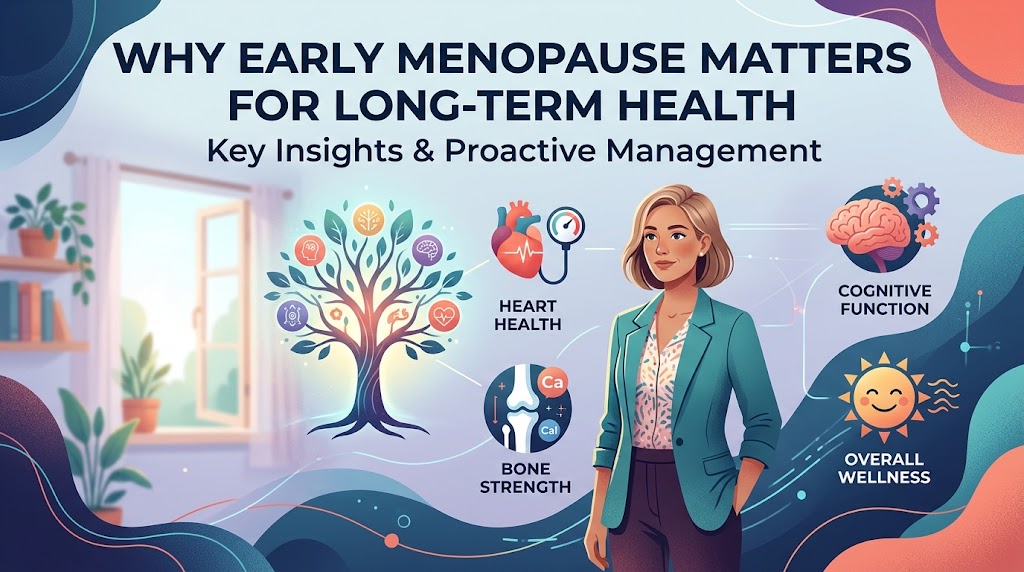
Estrogen has important effects throughout the body. When estrogen levels remain low at a younger age, there can be implications for bone health, cardiovascular health, vaginal and sexual health, and overall well-being.
Bone health deserves particular attention because lower estrogen levels can accelerate bone loss. This can increase the risk of osteopenia and osteoporosis.
For this reason, women experiencing early menopause or primary ovarian insufficiency may need individualized advice about bone health, nutrition, physical activity, calcium and vitamin D intake, and appropriate medical treatment.
Can Early Menopause at 40 Be Reversed?
Click Here To Visit Website For Menopause Symptoms Treatment!..
Whether ovarian function can return depends on the underlying cause.
If missed periods are caused by factors such as significant weight loss, excessive exercise, certain medications, thyroid problems, or another treatable condition, menstrual function may improve when the underlying issue is addressed.
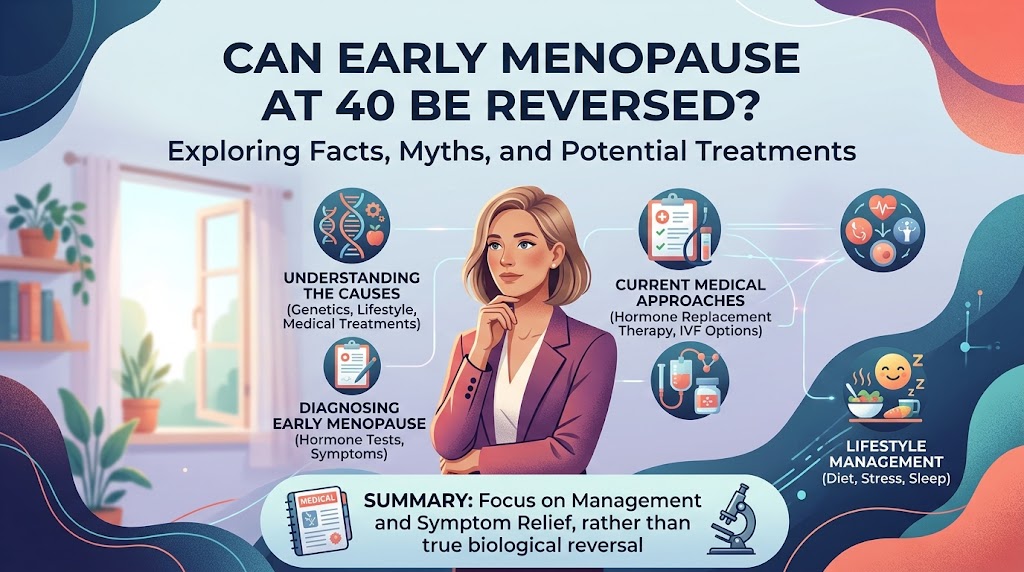
True menopause caused by permanent loss of ovarian function cannot simply be reversed with diet, exercise, or supplements.
However, many symptoms and health consequences associated with low estrogen can be managed. Depending on your individual circumstances, your healthcare professional may discuss hormone therapy or other treatments, particularly when menopause occurs substantially earlier than the usual age.
Treatment decisions should be individualized because hormone therapy is not appropriate for everyone.
When Should You See a Doctor?
You should consider medical evaluation if you are around 40 and notice significant changes in your menstrual cycle, particularly if periods stop or become consistently irregular.
Seek medical advice especially if you experience:
- No periods for several months
- Frequent or severe hot flashes
- New vaginal dryness
- Unexplained fertility problems
- Significant changes in menstrual bleeding
- Symptoms suggesting a thyroid or other hormonal problem
- A history of chemotherapy, pelvic radiation, or ovarian surgery
- A family history of very early menopause
Unexpected changes in menstrual patterns should not simply be dismissed as “getting older.”
Final Thoughts
Experiencing menopause-related symptoms at 40 can be confusing and concerning, but there are several possible explanations.
Genetics, primary ovarian insufficiency, cancer treatments, ovarian surgery, autoimmune conditions, genetic factors, smoking, certain medications, major physical stressors, and unexplained ovarian aging can all potentially play a role in early loss of ovarian function.
At the same time, irregular periods at 40 do not necessarily mean you have reached menopause. Perimenopause and several other medical conditions can produce similar symptoms.
The best first step is to speak with a qualified healthcare professional and have the cause properly evaluated. Early identification can be especially important because managing hormone-related symptoms and protecting bone and cardiovascular health may help support long-term well-being.
If you are experiencing changes in your periods at 40, don’t assume that you simply have to live with the symptoms. Understanding what is happening—and identifying the underlying cause when possible—can help you make informed decisions about your health and treatment options.