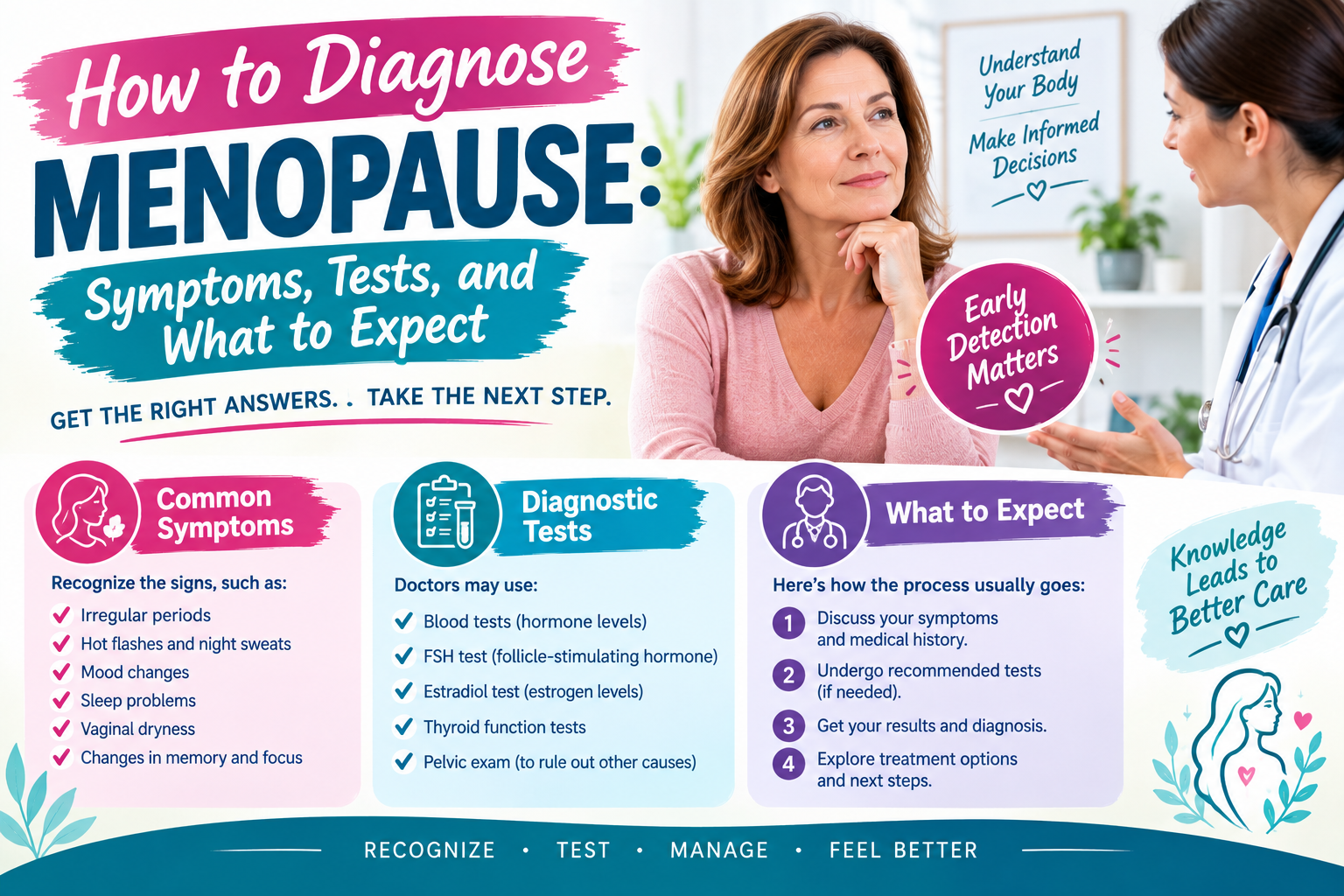
Menopause is a natural stage of life, but knowing whether you are actually going through menopause can sometimes be confusing. Changes in your menstrual cycle, hot flashes, sleep problems, mood changes, and other symptoms can have several possible causes.
So, how is menopause diagnosed? In many women, menopause can be identified based primarily on age, menstrual history, and symptoms. Blood tests are not always necessary, particularly for women in the typical menopausal age range. However, testing may be recommended when symptoms occur earlier than expected, periods change unexpectedly, or another medical condition needs to be ruled out.
Understanding the symptoms, diagnostic process, and possible tests can help you know what to expect when speaking with a healthcare professional.
What Is Menopause?

Click Here To Visit Website For Menopause Symptoms Treatment!..
Menopause is the point in time when a woman permanently stops having menstrual periods because the ovaries have significantly reduced their production of reproductive hormones, particularly estrogen.
A person is generally considered to have reached menopause after 12 consecutive months without a menstrual period, provided there is no other medical explanation for the absence of periods.
Menopause itself is not a disease. It is a normal biological transition.
However, the transition leading to menopause—known as perimenopause—can last for several years and may cause a wide range of symptoms.
What Is Perimenopause?
Before menopause occurs, the ovaries gradually change their production of estrogen and progesterone. This transitional period is called perimenopause.
During perimenopause, menstrual periods may become unpredictable. You might have a period one month and skip the next. Your bleeding may also become heavier or lighter than usual.
Other symptoms can appear during this stage, including hot flashes, night sweats, sleep difficulties, mood changes, and vaginal dryness.
Because hormone levels fluctuate during perimenopause, symptoms can sometimes come and go.
This is one reason why diagnosing menopause is not always as simple as taking a single blood test.
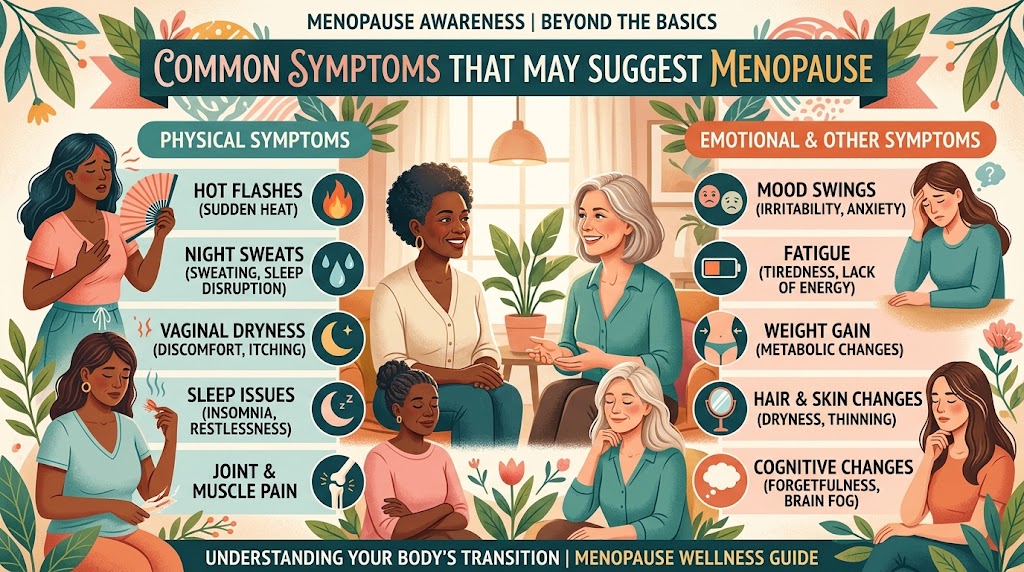
Common Symptoms That May Suggest Menopause
Click Here To Visit Website For Menopause Symptoms Treatment!..
Menopause affects people differently. Some women experience many symptoms, while others experience only mild changes.
Common symptoms include:
- Irregular menstrual periods
- Missed periods
- Hot flashes
- Night sweats
- Sleep problems
- Mood changes
- Irritability
- Vaginal dryness
- Discomfort during sexual activity
- Changes in sexual desire
- Fatigue
- Difficulty concentrating
- Headaches
- Changes in skin or hair
- Urinary symptoms
- Joint or muscle discomfort
Not every symptom is caused by menopause. For example, fatigue, mood changes, sleep problems, and irregular periods can also occur because of thyroid disorders, stress, medications, pregnancy, nutritional problems, or other medical conditions.
That is why your overall health history matters when determining what is happening.
How Is Menopause Diagnosed?
For many women, menopause is diagnosed clinically. This means a healthcare professional looks at your age, menstrual history, and symptoms rather than relying on a laboratory test.
If you are around the usual age for menopause and your periods have become irregular followed by a complete absence of periods for 12 months, additional testing may not be necessary.
Your healthcare professional may ask questions such as:
- When was your last menstrual period?
- How regular were your periods previously?
- Have your periods become heavier or lighter?
- How often are you experiencing hot flashes?
- Are you having night sweats?
- Have you noticed vaginal dryness?
- Are you experiencing sleep difficulties?
- Have you noticed mood or concentration changes?
- Are you taking medications or hormonal contraception?
- Could you be pregnant?
- Do you have a history of thyroid or other hormonal conditions?
These questions help determine whether your symptoms are consistent with menopause or whether further investigation is appropriate.
When Are Blood Tests Needed?
Blood tests are not routinely required to diagnose menopause in every woman.
In women in the typical age range for menopause, symptoms and menstrual history may provide enough information.
However, blood tests can be useful in certain situations. Testing may be considered if menopause is suspected at a younger age, menstrual changes are unusual, or the healthcare professional wants to rule out another cause.
One commonly discussed hormone is follicle-stimulating hormone (FSH).
FSH levels generally rise as ovarian function declines. However, hormone levels can fluctuate substantially during perimenopause. As a result, a single FSH measurement may not always give a definitive answer.
Your healthcare professional will determine whether hormone testing is appropriate based on your age, symptoms, menstrual history, and medical circumstances.
What Is an FSH Test?
FSH is a hormone produced by the pituitary gland. It helps regulate ovarian function and the menstrual cycle.
As ovarian activity decreases during the menopausal transition, the body generally produces more FSH in an attempt to stimulate the ovaries.
Therefore, elevated FSH can be associated with menopause or ovarian insufficiency.
However, an FSH test alone should not automatically be interpreted as proof that someone has reached menopause. Levels can vary during perimenopause.
This is particularly important for women who still occasionally have menstrual periods.
Other Blood Tests Your Doctor May Consider
Depending on your symptoms and circumstances, your healthcare professional may recommend other tests.
For example, a pregnancy test may be appropriate if pregnancy is possible and periods have stopped or become irregular.
A thyroid-stimulating hormone (TSH) test may be considered because thyroid disorders can cause menstrual changes and symptoms that overlap with menopause.
Other hormone tests may sometimes be appropriate depending on the situation.
The purpose of testing is not simply to confirm menopause. It can also help rule out other conditions that could explain your symptoms.
Menopause Diagnosis Around Age 40
If menopause-like symptoms occur around age 40, the diagnostic approach may be different.
Menopause before age 45 is generally described as early menopause, while loss of ovarian function before age 40 may raise concern for primary ovarian insufficiency (POI).
If you are younger than expected for menopause and your periods have become irregular or stopped, your healthcare professional may recommend additional evaluation.
This can be particularly important because early loss of estrogen can affect bone health, cardiovascular health, fertility, and overall well-being.
Do not assume that missed periods at a younger age automatically mean menopause. Pregnancy, thyroid disorders, medications, significant weight changes, excessive exercise, and other conditions can also affect menstruation.
What About Menopause While Taking Birth Control?

Click Here To Visit Website For Menopause Symptoms Treatment!..
Hormonal contraception can make menopause more difficult to recognize.
Some birth-control methods can reduce or stop menstrual bleeding, meaning the absence of periods does not necessarily indicate menopause.
Hormonal contraception can also influence symptoms and hormone measurements.
If you are using birth control and think you may be approaching menopause, talk with your healthcare professional about how your contraceptive method affects the evaluation.
Do not stop contraception simply because you think you may be menopausal. Pregnancy can remain possible during perimenopause until menopause has been appropriately established.
What Should You Expect During a Menopause Appointment?

Click Here To Visit Website For Menopause Symptoms Treatment!..
A menopause evaluation usually begins with a conversation about your symptoms and menstrual history.
Your healthcare professional may ask about:
- Your age
- Your last menstrual period
- Changes in your menstrual cycle
- Hot flashes and night sweats
- Sleep quality
- Mood and emotional changes
- Vaginal or urinary symptoms
- Medications
- Medical conditions
- Previous surgeries
- Family history
- Pregnancy possibility
- Your reproductive goals
A physical examination may be performed when medically appropriate.
Depending on your situation, your clinician may recommend blood tests or other investigations.
The appointment is also an opportunity to discuss symptoms that are affecting your quality of life.
Can Menopause Be Diagnosed Without a Blood Test?

Click Here To Visit Website For Menopause Symptoms Treatment!..
Yes.
In many women in the typical menopausal age range, menopause can be identified through menstrual history and characteristic symptoms.
The key milestone is 12 months without a menstrual period, when there is no other explanation for the absence of menstruation.
Blood tests are generally more useful when the diagnosis is uncertain or menopause is suspected at an unusually young age.
This is why it is not always necessary to repeatedly test hormone levels every time menopause symptoms occur.
Conditions That Can Mimic Menopause
Several conditions can produce symptoms similar to menopause.
These may include:
- Thyroid disorders
- Pregnancy
- Certain medications
- Elevated prolactin
- Significant weight loss
- Excessive exercise
- Severe stress
- Polycystic ovary syndrome
- Primary ovarian insufficiency
- Other hormonal disorders
For this reason, unexplained changes in your menstrual cycle should be discussed with a healthcare professional.
Why Early Diagnosis Matters
Identifying menopause or early ovarian insufficiency can be important for more than symptom management.
Estrogen plays an important role in maintaining bone health. When estrogen levels remain low for an extended period, bone loss can increase.
Early menopause may therefore be associated with a higher risk of reduced bone density.
Your healthcare professional may discuss lifestyle measures such as regular weight-bearing activity, resistance exercise, adequate nutrition, and appropriate calcium and vitamin D intake.
Depending on your age, symptoms, health history, and individual risk factors, medical treatment may also be considered.
When Should You See a Healthcare Professional?
You should consider discussing menopause symptoms with a healthcare professional if menstrual changes are persistent, symptoms interfere with daily life, or you are uncertain about what is causing them.
Medical evaluation is especially important if:
- Menopause-like symptoms occur before age 45
- Your periods suddenly stop
- You experience unusually heavy or prolonged bleeding
- You have bleeding after menopause
- You are unsure whether pregnancy is possible
- Symptoms are severe or rapidly worsening
- You have a history of chemotherapy, radiation, or ovarian surgery
- You have concerns about bone or cardiovascular health
Unusual or heavy bleeding should not automatically be attributed to menopause and may require further evaluation.
How Can You Prepare for Your Appointment?
Preparing a few details before your appointment can make the conversation easier.
Consider tracking:
Your menstrual cycle: Record the dates and duration of your periods and note significant changes in bleeding.
Your symptoms: Write down hot flashes, night sweats, sleep problems, mood changes, vaginal symptoms, and other concerns.
Your medications: Make a list of prescription medicines, over-the-counter products, and supplements.
Your medical history: Include previous surgeries, significant illnesses, cancer treatments, and relevant family history.
Your questions: Write down anything you want to discuss, including treatment options and whether you need testing.
A symptom diary can be especially helpful when symptoms are intermittent.
Final Thoughts
Diagnosing menopause does not always require complicated testing. For many women in the typical menopausal age range, healthcare professionals can make the diagnosis based on age, menstrual history, and symptoms.
Blood tests such as FSH may be considered in certain situations, particularly when menopause occurs earlier than expected or when another condition needs to be ruled out. Because hormone levels fluctuate during perimenopause, a single test does not always provide a complete answer.
If you are experiencing irregular periods, hot flashes, night sweats, sleep problems, or other changes, talk with a qualified healthcare professional. Getting an accurate diagnosis can help you understand what is happening and identify appropriate ways to manage symptoms and protect your long-term health.
Most importantly, remember that menopause is a normal biological transition—but symptoms that are unexpected, severe, or occurring unusually early deserve proper evaluation.