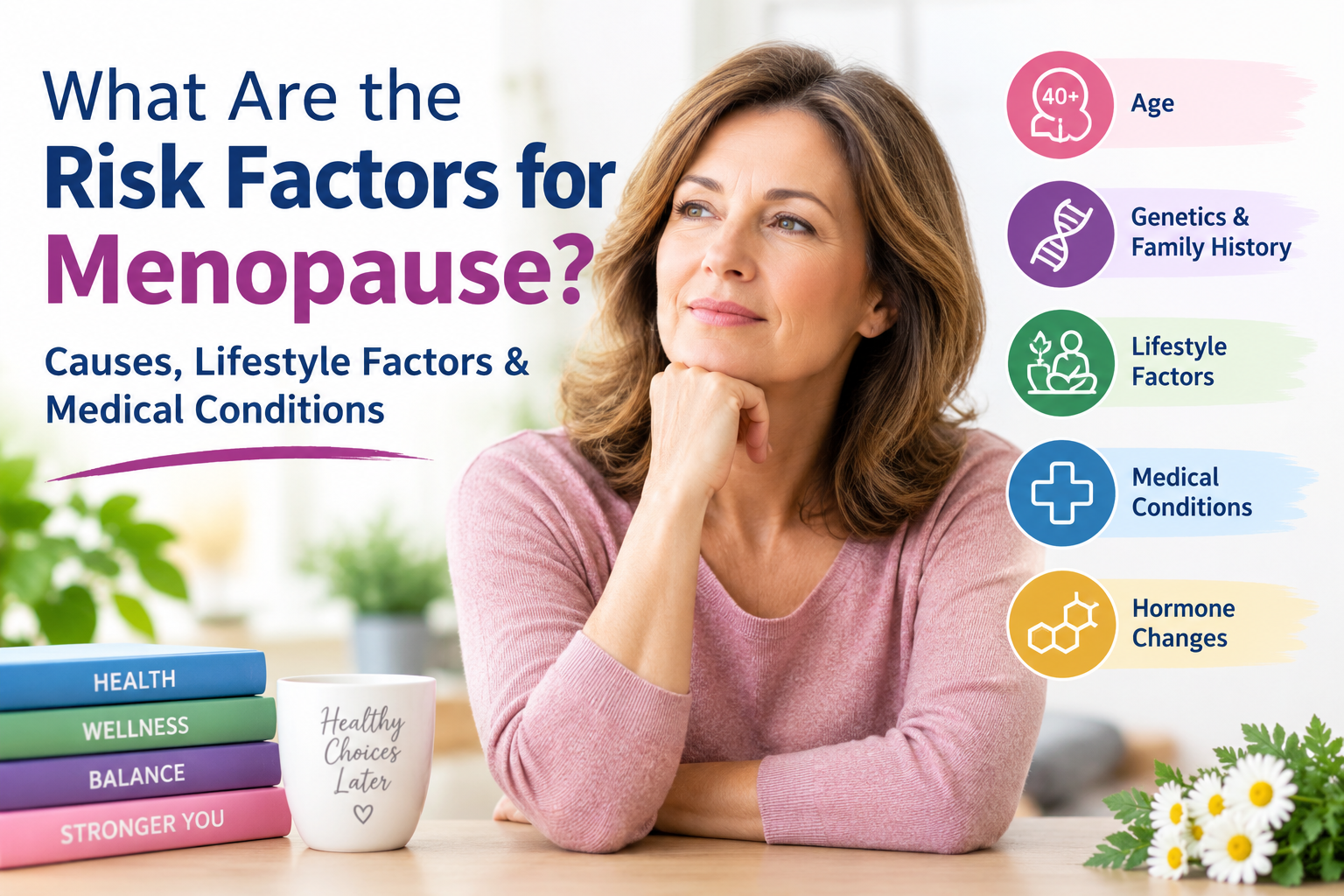
Menopause is a natural biological transition that eventually happens to everyone with ovaries, but the age at which it occurs can vary considerably. Some people experience menopause in their early 40s, while others continue having periods into their 50s. This can lead to an important question: What are the risk factors for menopause, and what can influence when it happens?
Menopause itself is not a disease, and it cannot always be prevented. The timing of natural menopause is influenced by genetics, age, reproductive history, lifestyle factors, medical conditions, and certain medical treatments. Some factors are outside your control, while others may be modifiable.
Understanding these factors can help you recognize changes in your menstrual cycle and know when it may be appropriate to discuss symptoms with a healthcare professional.
What Is Menopause?
Click Here To Visit Website For Menopause Symptoms Treatment!..
Menopause is the point when menstrual periods permanently stop because ovarian function has declined and reproductive hormone production has decreased.
A person is generally considered to have reached menopause after 12 consecutive months without a menstrual period, when there is no other explanation for the absence of periods.
The years leading up to menopause are called perimenopause. During this transition, hormone levels can fluctuate and periods may become irregular.
Menopause most commonly occurs between ages 45 and 55, although the timing differs from person to person.
Is Menopause Hereditary?

Click Here To Visit Website For Menopause Symptoms Treatment!..
One of the strongest influences on the timing of natural menopause is genetics.
If your mother or close female relatives experienced menopause at a younger or older age, you may have a tendency toward a similar timing. Researchers believe that multiple genes contribute to ovarian aging and the age at which menopause occurs.
However, family history does not determine exactly when menopause will happen.
Environmental exposures, smoking, medical conditions, reproductive history, and other factors may also influence the timing.
1. Age
Age is the most important overall factor associated with menopause.
As people get older, the number and function of ovarian follicles gradually decline. Eventually, the ovaries produce less estrogen and ovulation becomes less frequent before menstruation eventually stops.
Although menopause can happen earlier or later, it most commonly occurs during the late 40s or early 50s.
Age alone does not predict exactly when an individual will reach menopause, but it provides important context when evaluating menstrual changes.
2. Family History
Family history can provide clues about menopause timing.
If your mother experienced natural menopause relatively early, you may have an increased likelihood of experiencing it earlier as well. Likewise, a family pattern of later menopause may be associated with later timing.
This is not a guarantee. Two sisters, for example, can experience menopause at different ages.
When discussing menstrual changes with your healthcare professional, mentioning your family’s menopause history can provide useful information.
3. Smoking
Smoking is one lifestyle factor that has been associated with earlier natural menopause.
The chemicals found in tobacco smoke may affect ovarian function and accelerate the loss of ovarian follicles. Research has consistently linked cigarette smoking with an earlier age at natural menopause.
Smoking also increases the risk of numerous other health problems, including cardiovascular disease, respiratory disease, and certain cancers.
If you smoke, quitting can provide significant health benefits regardless of its effect on menopause timing.
4. Low Body Weight and Significant Weight Changes
Click Here To Visit Website For Menopause Symptoms Treatment!..
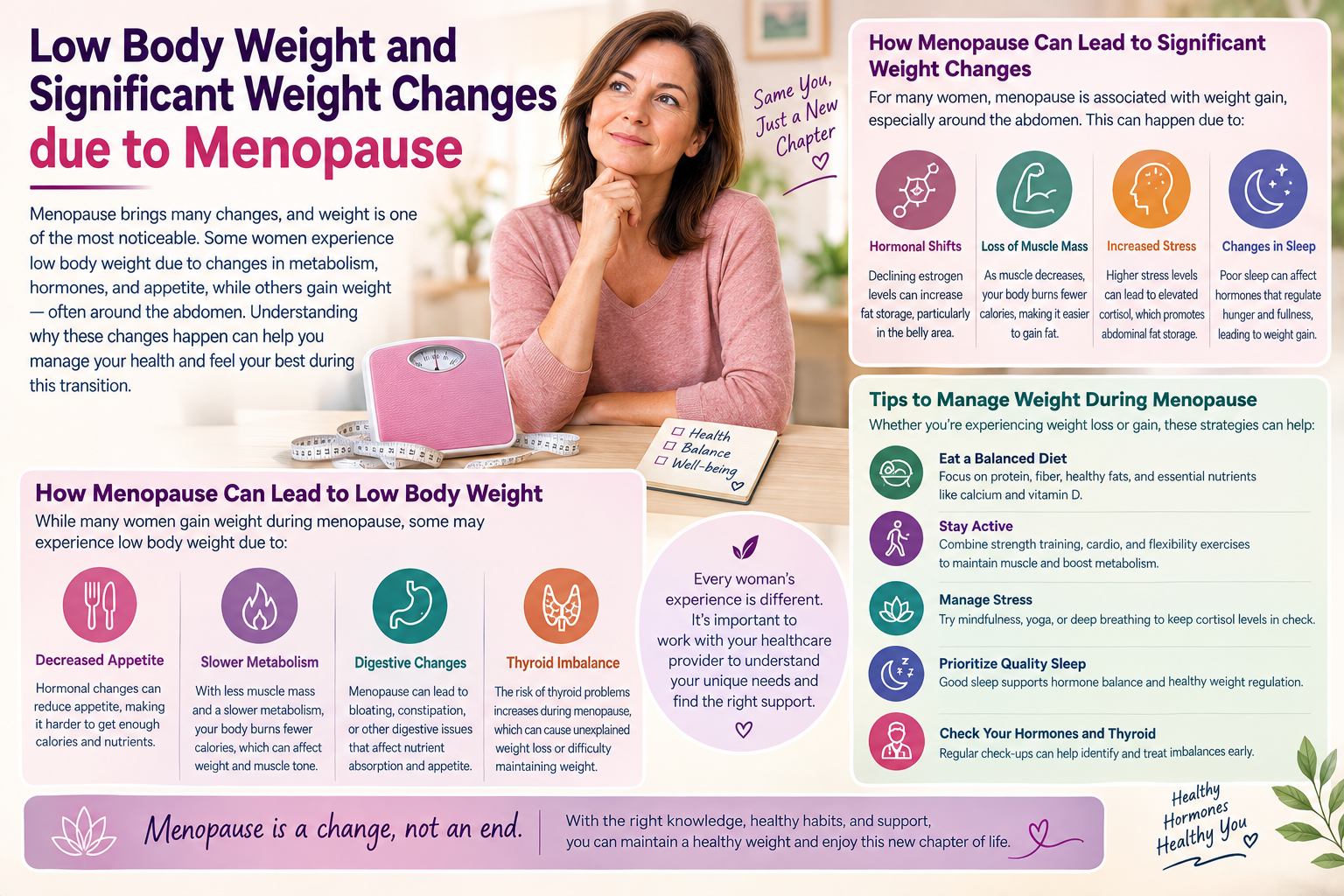
Body weight and nutritional status can influence reproductive function.
Very low body weight, significant weight loss, or inadequate calorie intake may disrupt the hormonal signals that regulate menstruation. In some cases, periods may become irregular or stop without the ovaries permanently reaching menopause.
This is particularly relevant for people who exercise intensely while consuming insufficient calories.
It is important to distinguish temporary loss of menstrual periods from true menopause. If periods stop unexpectedly, medical evaluation can help determine the cause.
5. Excessive Physical Activity
Regular exercise is generally beneficial for overall health and is important for maintaining strong bones and cardiovascular health.
However, very intense physical activity combined with insufficient energy intake can interfere with normal reproductive hormone signaling.
Athletes and people participating in high levels of endurance training may experience irregular or absent periods.
This does not necessarily mean they have reached menopause. The menstrual changes may be related to low energy availability or other factors.
If intense exercise is accompanied by missed periods, fatigue, significant weight changes, or other symptoms, discussing the situation with a healthcare professional is recommended.
6. Chemotherapy and Radiation
Certain cancer treatments can affect ovarian function.
Chemotherapy can damage ovarian follicles, while radiation involving the pelvic region can affect ovarian tissue.
The effect varies according to factors such as the person’s age, treatment type, dosage, and treatment location.
Some people may experience temporary menstrual changes, while others may develop permanent ovarian dysfunction or treatment-related menopause.
Anyone who has undergone cancer treatment and develops significant menstrual changes should discuss them with their healthcare and oncology teams.
7. Ovarian or Pelvic Surgery
Some surgical procedures can affect ovarian function.
Removal of both ovaries causes an immediate reduction in ovarian hormone production and results in surgical menopause.
Other procedures involving the ovaries may potentially affect ovarian reserve depending on the type of surgery and how much ovarian tissue is affected.
A hysterectomy that removes the uterus but leaves the ovaries in place does not automatically cause menopause because the ovaries may continue producing hormones. However, ovarian function can change following some procedures.
Your surgical history is therefore important when evaluating early menopause symptoms.
8. Primary Ovarian Insufficiency
Primary ovarian insufficiency (POI) occurs when the ovaries stop functioning normally before age 40.
POI can cause irregular periods, absent periods, hot flashes, vaginal dryness, infertility, and other symptoms associated with reduced estrogen.
There are several possible causes, including genetic conditions, autoimmune disorders, medical treatments, and certain other factors. However, in many cases, no specific cause is identified.
POI is not necessarily identical to complete, permanent menopause. Some people with POI may occasionally ovulate or have menstrual periods.
If periods stop before age 40, medical evaluation is important.
9. Autoimmune Conditions
Some autoimmune diseases have been associated with ovarian dysfunction.
Autoimmune conditions occur when the immune system mistakenly attacks the body’s own tissues. In some cases, ovarian tissue or hormone-producing cells may be affected.
Autoimmune thyroid disorders and Addison’s disease are examples of conditions that can occur alongside ovarian insufficiency.
Having an autoimmune condition does not mean that someone will definitely experience early menopause. However, a person’s medical history can help healthcare professionals determine whether additional evaluation is appropriate.
10. Genetic and Chromosomal Factors
Certain genetic or chromosomal conditions can affect ovarian development and function.
For example, Turner syndrome can be associated with ovarian insufficiency and early loss of ovarian function.
Some genetic changes may also influence ovarian reserve or reproductive health.
Genetic testing is not necessary for everyone experiencing menopause. However, healthcare professionals may consider it in selected people, particularly when ovarian insufficiency occurs at a very young age or there is a relevant family history.
11. Certain Medical Treatments and Medications
Some treatments can interfere with reproductive hormone production or ovarian function.
Hormonal medications can also change menstrual patterns, making it difficult to determine whether someone is approaching menopause based solely on their periods.
For example, hormonal contraceptives may reduce or completely suppress menstrual bleeding without causing menopause.
Other medications can affect menstruation indirectly.
Never stop a prescribed medication simply because your menstrual cycle has changed. Discuss possible medication effects with your healthcare professional.
12. Reproductive History
A person’s reproductive history may also be associated with the timing of menopause, although these relationships are not always straightforward.
Factors such as age at first menstruation, number of pregnancies, breastfeeding history, and use of hormonal contraception have been studied in relation to menopause timing.
However, these factors generally have less predictive value than age and genetics.
Your healthcare professional may still ask about your reproductive history because it provides important context when evaluating menstrual changes.
13. Certain Medical Conditions
Some health conditions can cause menstrual irregularities or symptoms that resemble menopause.
Thyroid disorders, elevated prolactin levels, certain endocrine conditions, eating disorders, and other health problems can interfere with menstrual cycles.
This is important because not every missed period or hot flash means menopause.
For example, thyroid disease can cause changes in periods, fatigue, mood changes, sleep problems, and other symptoms that may overlap with perimenopause.
Identifying and treating an underlying medical condition may improve symptoms and restore menstrual regularity in some cases.
14. Chronic Stress
Long-term physical or psychological stress can affect the hormonal system that regulates menstruation.
Severe stress may contribute to irregular or missed periods, particularly when combined with inadequate nutrition, excessive exercise, or major weight changes.
However, stress should not automatically be blamed when periods stop.
If menstrual changes are persistent or occur at an unexpectedly young age, a healthcare professional can help determine whether stress or another condition is responsible.
Can You Prevent Menopause?

Click Here To Visit Website For Menopause Symptoms Treatment!..
Natural menopause cannot be completely prevented. Aging of the ovaries is a normal biological process.
However, some lifestyle choices may support overall health during the menopausal transition.
Helpful habits include:
- Avoiding tobacco products
- Maintaining a balanced diet
- Getting regular physical activity
- Including resistance and weight-bearing exercises
- Maintaining a healthy weight
- Limiting excessive alcohol consumption
- Getting adequate sleep
- Managing chronic health conditions
- Attending recommended health screenings
These habits do not guarantee that menopause will occur later. Their main benefit is supporting overall health and reducing risks associated with aging and hormonal changes.
Why Menopause Timing Matters
Click Here To Visit Website For Menopause Symptoms Treatment!..
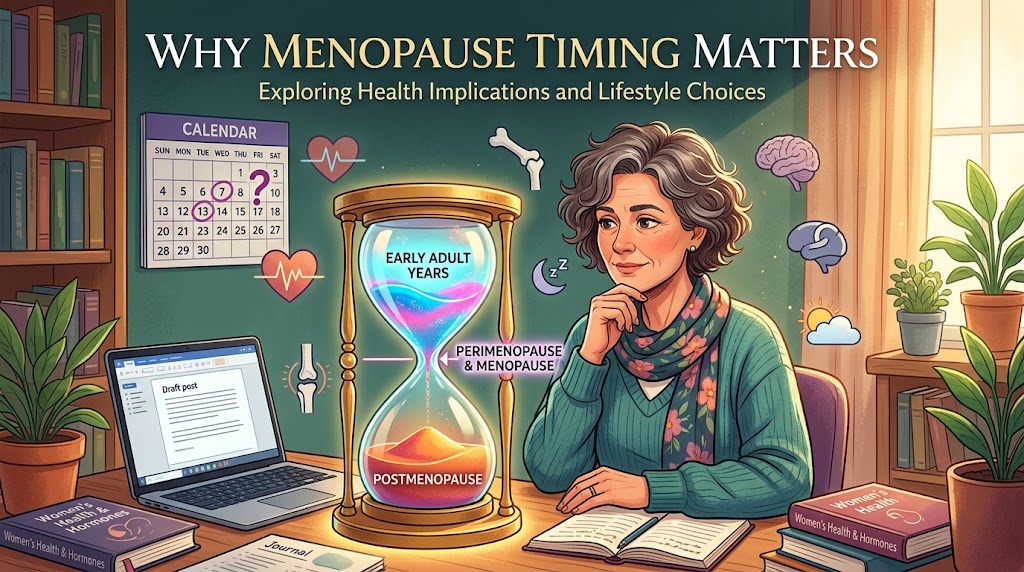
The timing of menopause can have implications beyond menstrual periods.
Estrogen has important effects on bone health, cardiovascular health, vaginal tissues, and other systems.
When menopause occurs substantially earlier than expected, prolonged exposure to low estrogen levels may increase concerns about bone density and other aspects of long-term health.
People who experience early menopause or primary ovarian insufficiency may therefore benefit from individualized discussions about bone health, cardiovascular risk, symptom management, and treatment options.
When Should You Talk to a Healthcare Professional?

Click Here To Visit Website For Menopause Symptoms Treatment!..
You should consider seeking medical advice if your periods become unusually irregular, stop unexpectedly, or are accompanied by significant symptoms.
Medical evaluation is particularly important if:
- Menopause symptoms develop before age 45
- Periods stop before age 40
- You experience very heavy or prolonged bleeding
- You have bleeding after menopause
- You have a history of chemotherapy or pelvic radiation
- You have had ovarian surgery
- You have symptoms suggesting a thyroid or other hormonal disorder
- You are concerned about fertility
- Menopause symptoms significantly affect your quality of life
Your healthcare professional can review your symptoms, menstrual history, medications, and medical history and determine whether testing is appropriate.
Final Thoughts
There is no single cause or risk factor that determines exactly when menopause will occur.
Age and genetics are major influences, while smoking, very low body weight, excessive exercise, certain medical conditions, autoimmune disorders, genetic factors, cancer treatments, and ovarian surgery may also affect ovarian function or menstrual patterns.
Some factors cannot be changed, but maintaining healthy lifestyle habits can support overall well-being throughout the menopausal transition.
Most importantly, irregular or absent periods do not always mean menopause. Especially when changes occur at a younger age, it is important to consider other possible causes.
If you are experiencing unexpected menstrual changes or menopause symptoms, speaking with a qualified healthcare professional can help you understand what is happening and determine whether further evaluation or treatment is appropriate.